The Pharmaceutical Packaging Equipment Deep Dive

Challenges, opportunities, machinery and best practices you need to know to succeed in this demanding market.

Hello, and welcome to the most comprehensive pharmaceutical packaging equipment resource you’ll find on the Internet! All of us at PMI Kyoto are happy you’re here, and we’re excited to share what we know about this vital and fast-paced industry.

Our bread and butter is the design, build, installation and support of custom pharmaceutical packaging systems, and this start-to-finish capability has given us a lot of industry and equipment expertise. We’re sharing that with you today.

There is a lot of information on this page, so here’s the table of contents. Feel free to read every word in one sitting (you have our thanks and admiration if you do so), or use the table of contents to jump to the sections that have the most relevance to you. And if you have any questions about pharmaceutical packaging, the industry as a whole or your own custom packaging system, let us know.


Table of contents --- anchors wont work ----

•  A history of pharmaceutical packaging
•  Present-day pharmaceutical packaging
•  What you’ll need to succeed in pharmaceutical packaging

      •  Equipment
      •  Budget
      •  Personnel
      •  Square footage

•  Biggest challenges in pharmaceutical packaging
•  What to demand from pharmaceutical packaging OEMs
•  About PMI Kyoto

      •  Differentiators
      •  Products
      •  Support
      •  History

A (short) history of pharmaceutical packaging

The earliest medicines were discovered and used thousands of years ago. Primarily plant-based, they needed a way to be stored to boost shelf life. Enter clay pots and animal bladders. Not terribly compliant, but we worked with what we had back then. 

Jumping forward to roughly the 18th century, glass became commonplace and molded, branded bottles showed up for the first time. By the time the 19th century came around, massive companies (still thriving today) like Pfizer and Eli Lilly emerged. Pfizer, founded in 1849, was instrumental in packaging medicines for use during the Civil War. Eli Lilly, founded in 1876, was a key medicine packaging provider during the industrial revolution.

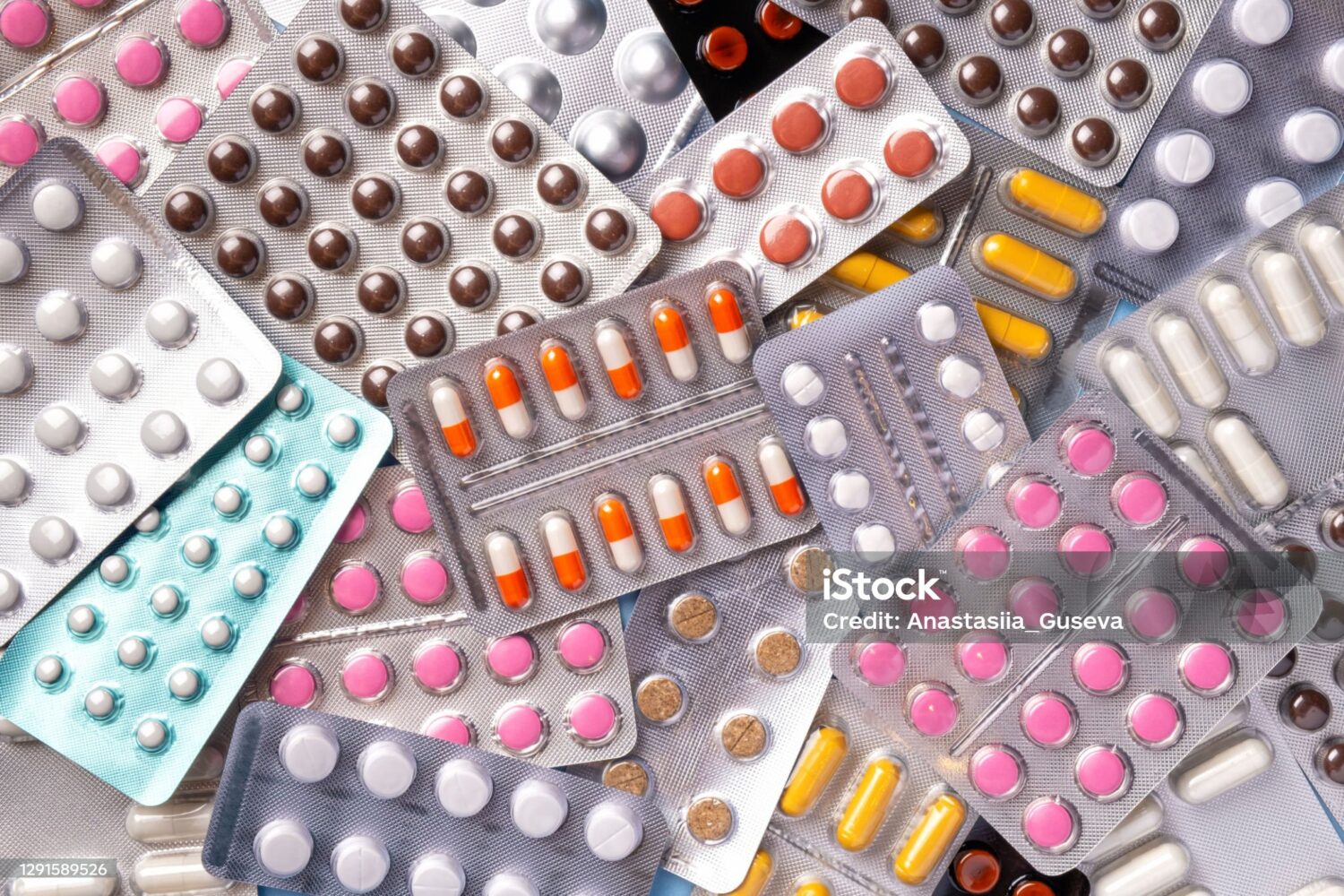
The post-WWII baby boom era introduced plastics and blister packs, bringing much-needed improvements to safety and convenience. The 1980s and 1990s saw the mass production of syringes in pharmaceutical packaging (more on this in a bit as it’s something PMI Kyoto is known for). And today, pharmaceutical packaging has increased safety measures like child-resistance, plus intelligent advancements like blister packs with calendars attached.

Present-day pharmaceutical packaging

And that brings us to today! Pharmaceutical packaging equipment and systems now offer jaw-dropping speed, efficiency and accuracy, often featuring automation equipment and monitoring systems that ensure productivity stays as high as possible. To expand on that, here are a few requirements many modern pharmaceutical packaging operations have.

  1. Even More Protection

Animal bladders don’t cut it anymore. The emergence of biologics and drugs high in complexity means they need to be increasingly protected against all kinds of external environmental factors. These medicines also need to survive their supply chain journey, arriving at the patient free of leaks or damage.

  1. Patients First

Have you designed for child-resistance and senior-friendly, easy-open functionality? Because it’s a difficult needle to thread. On top of that, chronic conditions and easy-reading, multilingual design has to be factored in as well. What is easiest, safest and best for the patient? That’s often what influences the packaging.

  1. Three words: Flexibility, Flexibility, FLEXIBILITY

This is easily the #1 need we identify when working with our pharmaceutical customers. Personalized medications and bespoke therapies are here to stay and growing fast, which means pharma packaging systems have to be ready for smaller batch sizes and rapid changeovers. And after all this time, human error is still very much a thing, so high-speed robotic packaging lines are often necessary to keep things as clean, safe and efficient as possible.

What you’ll need to succeed in pharmaceutical packaging

I could use PMIK’s notes here. Some of the topics to touch on include:
  • Equipment
  • Budget
  • Personnel
  • Square Footage

Biggest challenges in pharmaceutical packaging

A fun fact about PMI Kyoto: our parent company, Kyoto Seisakusho Co (which we refer to as KSS), is based in Kyoto, Japan. KSS are pharmaceutical packaging experts, with a vast majority of its business coming from that sector. Their long history of innovation and focus on pharma has resulted in not just machines, but entire pharmaceutical packaging systems that are built for today’s demands while being ready for tomorrow’s challenges. 

Here at PMI Kyoto in North America, we have been key players in pharmaceutical packaging since 2005. In that time, we have worked closely with our customer base and with the pharma packaging sector to keep an accurate pulse on what matters. The typical pain points and challenges we help solve for in the pharma sector include:

  1. Changeovers

Simply put, changeovers are what occur when there’s a change to factor for in your packaging line. You might have different product batches, sizes or formats, which means it’s time for shutdown, cleaning, setup and startup.

The unfortunate irony is that changeovers are often anything but simple. The process can take hours, sometimes as long as an entire shift, which means no money is being made in that time. It’s a significant pain point for any pharmaceutical packaging line.

  1. Compliance

Globally, the pharmaceutical industry generated $1.6 trillion in revenue in 2023. That’s a lot of dollars, and getting safe products into customers’ hands is a complex multi-faceted process. Sustainability, sterility and security are three key factors that every modern manufacturer accounts for. 

And for their pharmaceutical packaging partners, they need to be current with the latest standards and able to provide proof that their machines and systems will keep manufacturers compliant.

What to demand from pharmaceutical packaging OEMs

  1. Vertical integration

Dealing with multiple vendors increases your time spent (and sometimes wasted) on a given project. But when pharma packaging OEMs offer a top-to-bottom solution under one roof, it saves time and money while increasing the probability that the packaging line will be an efficient, revenue-generating success.

  1. More than the machine

When building your pharmaceutical packaging line, don’t go it alone. Find an OEM that designs the custom, process-fitting system your specific line needs. No two lines are the same, so no two solutions should be the same either.

  1. Proven track record

There is a smoothness that exudes from OEMs who are comfortable and fluent in the work they’re doing. Everything is just plain easier, and any headaches have a much shorter severity and duration. 

  1. Speed everywhere

Your chosen pharmaceutical packaging OEM should be fast in all areas. Lead times, machine speed, changeovers and support responses all must be resolved quickly. 

  1. Stellar post-sale support

Some questions you can and should ask when evaluating pharmaceutical packaging OEMs:

  • Is one of your engineers on-site after installation to help us with training and troubleshooting? If so, for how long?
  • What are your support inquiry turnaround times? How long does it take to get a question answered? To have a spare part on my doorstep? To book a technician for on-site service?
  • If I need a custom part made for my pharmaceutical packaging system, do you outsource that work or do you have machining and fabricating capability in-house?
  • What remote support do you offer? How reliable is it?

How PMI Kyoto handles pharmaceutical packaging

  1. Pharmaceutical Packaging Machines and Equipment

With our extensive machine expertise and industry experience, we understand that packaging pharma products with great care and precision is critical to the end users’ health—and to your success as a company. 

Only the best pharma packaging systems and machinery can prevent breakage of vials and syringes and ensure that labels are securely affixed to containers. This is the home of custom, safe and efficient pharmaceutical packaging solutions.

  1. Unique Capabilities and Experience

Our application experience in the pharma industry allows us to customize pharmaceutical packaging equipment for many products. Below are two recent examples of how this experience came to life for our customers. 

Important note: we are a custom, designed-from-the-ground up packaging OEM that integrates easily with your existing lines or builds lines and systems from scratch. Translation: if the examples below aren’t an exact fit, don’t fret. Reach out to us and we’ll start building your ideal system together.

Blister Pack Cartoning with Delta Robot Loading

We built this drug packaging machine with a pick-and-place delta robot to put pill blister packs into cartons quickly (and more efficiently) than other packaging systems. When it comes to robotic packaging capabilities, we don’t need 

Bonus: we are proud to say our lead times are the best in the industry, despite the custom nature of our pharmaceutical packaging projects. You will get your high-performing pharma packaging system on your floor sooner.

Syringes Into Tray

We built a medicine packaging machine that very gently loads pre-dosed syringes into trays using a 6-axis robot. This pharmaceutical machine was designed to package syringes in a secure and sterile manner that protects the doses within the syringes — while making sure that the package is easy to open.

Bonus: our syringe machines are flat-out and undeniable industry leaders. For evidence, look no further than changeovers. Typical changeover times run in the 6 to 8 hour range. Ours are 30 minutes to 1 hour.

  1. Integration and Automation for Pharmaceutical Packaging Machines

We understand that most pharma manufacturers already have existing upstream and downstream systems, which is why we make sure our equipment is designed and built to integrate cleanly with those systems. Our engineering team custom-builds pharmaceutical packaging machines not just for form, but also for fit within larger production and packaging environments. Our packaging line integration expertise includes serialization, quality assurance through vision systems and sensors, feeding systems and case packing.

No matter how they slot into an existing setup, we take care to ensure our systems are reliable, utilize all the appropriate communication protocols and meet industry-specific requirements for traceability and cleanability. Perhaps best of all, our solutions are fully scalable to support any modifications as new product lines or regulations emerge.

  1. Need the right OEM for your pharmaceutical packaging line? Work with PMI Kyoto!

No matter the specifics of your pharma project, our engineers leverage their decades of experience with high-speed applications and delicate handling requirements. Our cartoning machines for the pharma industry are custom-built to your products as well as your team’s requirements, ensuring our equipment will be the perfect fit for your specific products, specifications and compliance needs. 

If you want to learn more about our capabilities with pharmaceutical and nutraceutical packaging machines or are interested in exploring a partnership, reach out to us today! We’re ready to get to work to deliver a brilliantly efficient, pain-free packaging system that lasts longer than you expect it to.

Interested in PMI KYOTO custom-made packaging machinery and systems?
